
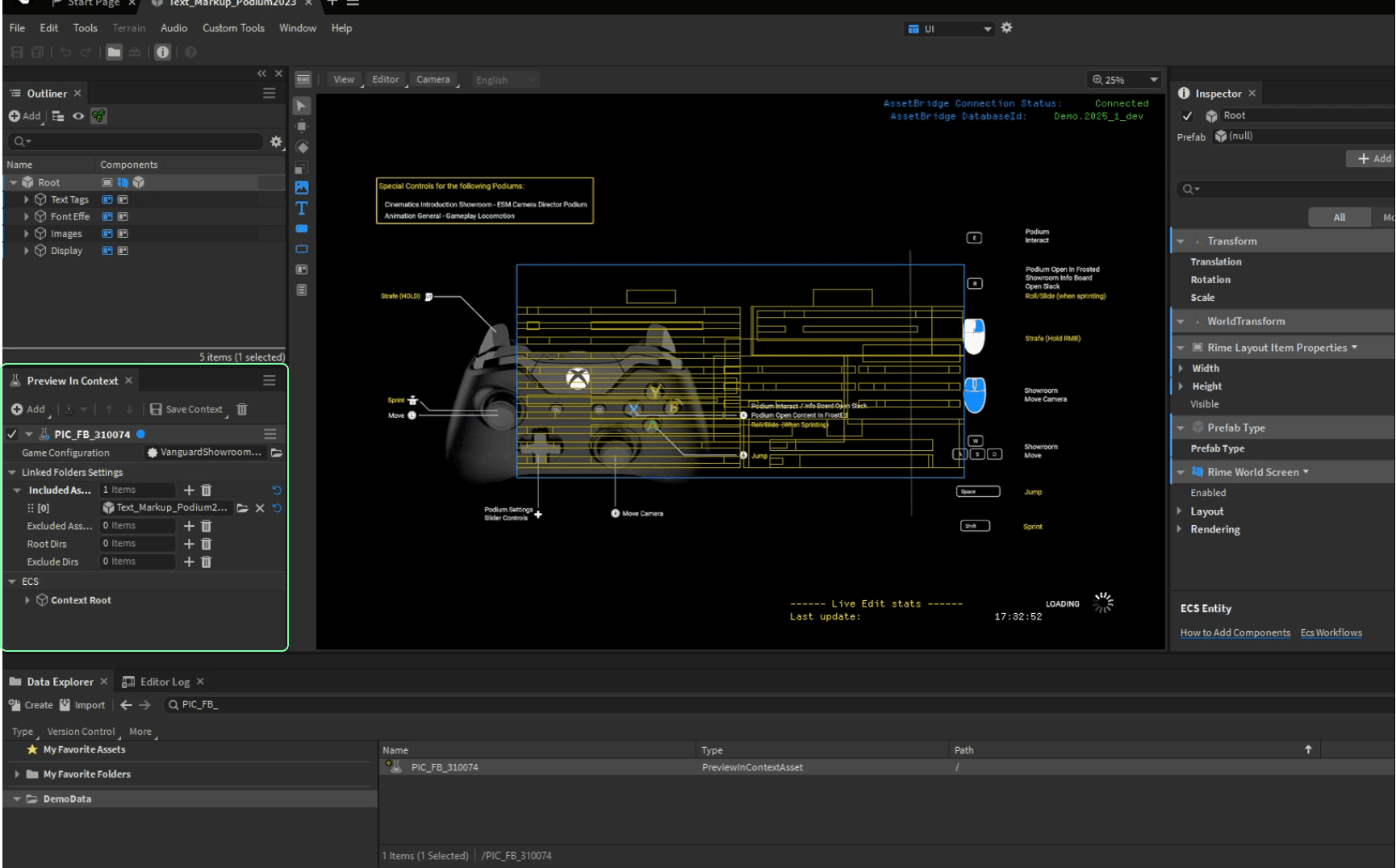
Preview-In-Context
Rebuilding Trust at EA
Developers testing small prefabs had to load entire levels (15-20 min, sometimes over an hour), risking crashes that lost all work and forced restarts—an illogical, wasteful approach.
About the project
Overview
I was hired to rebuild the bridge between the engineering team and the UX team—to demonstrate the value of our UX team's embedded model.
The engineering relationship was fractured after a previous designer couldn't adapt to change. My job: earn back trust while shipping a solution that reduced test setup time and eliminated data loss risk.
Goal & Impact
- → Eliminate crashes during testing
- → Remove psychological fear (backup ritual)
- → Enable collaboration through sharing
- → Rebuild UX-Engineering partnership
Results:
- ✓Eliminated crash/corruption risk
- ✓Expanded team engagement
"Chris's approach to problem-solving is both strategic and empathetic. He doesn't just design solutions; he understands the people and systems behind them."— Martin, Product Manager
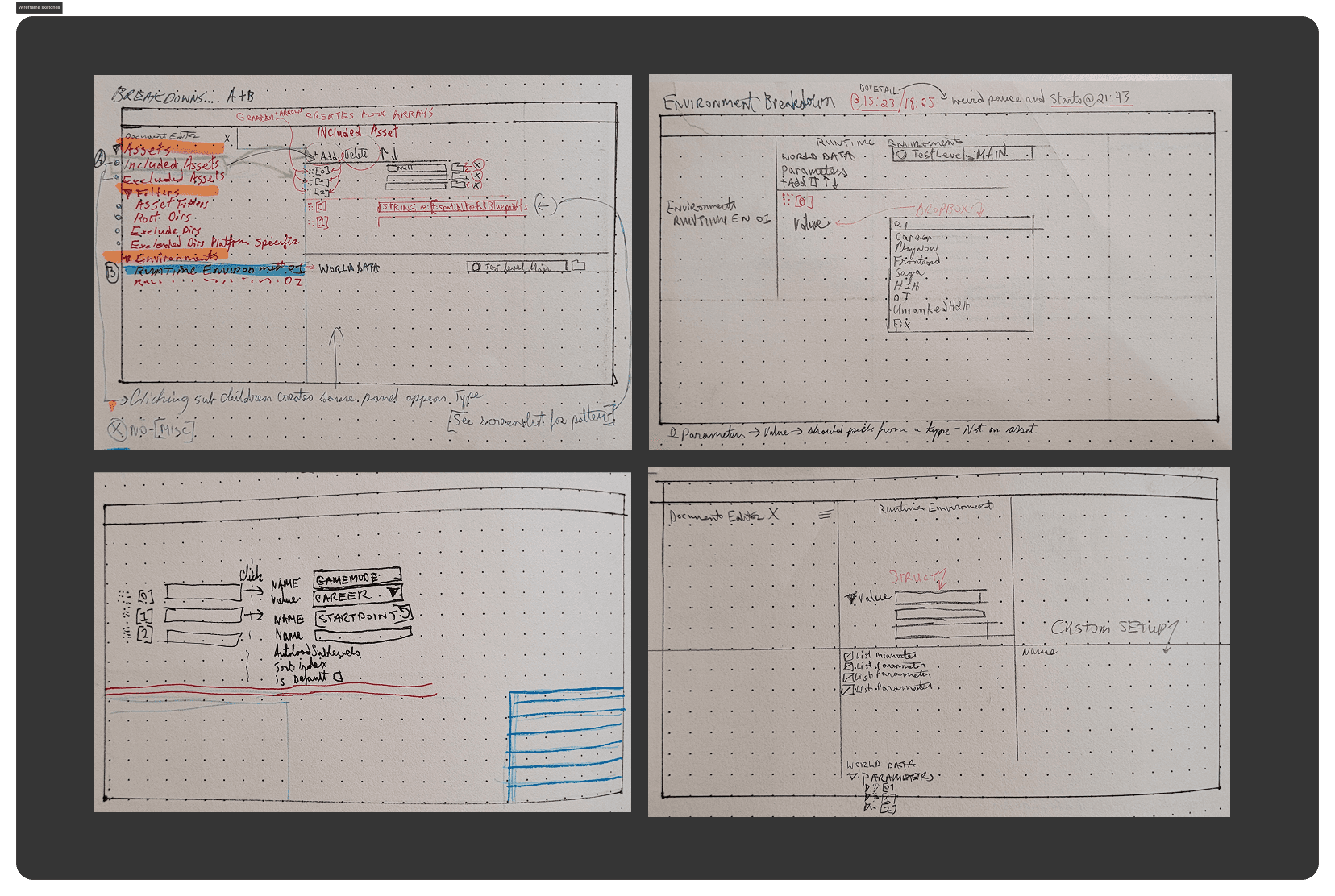
Sketches/Wireframes
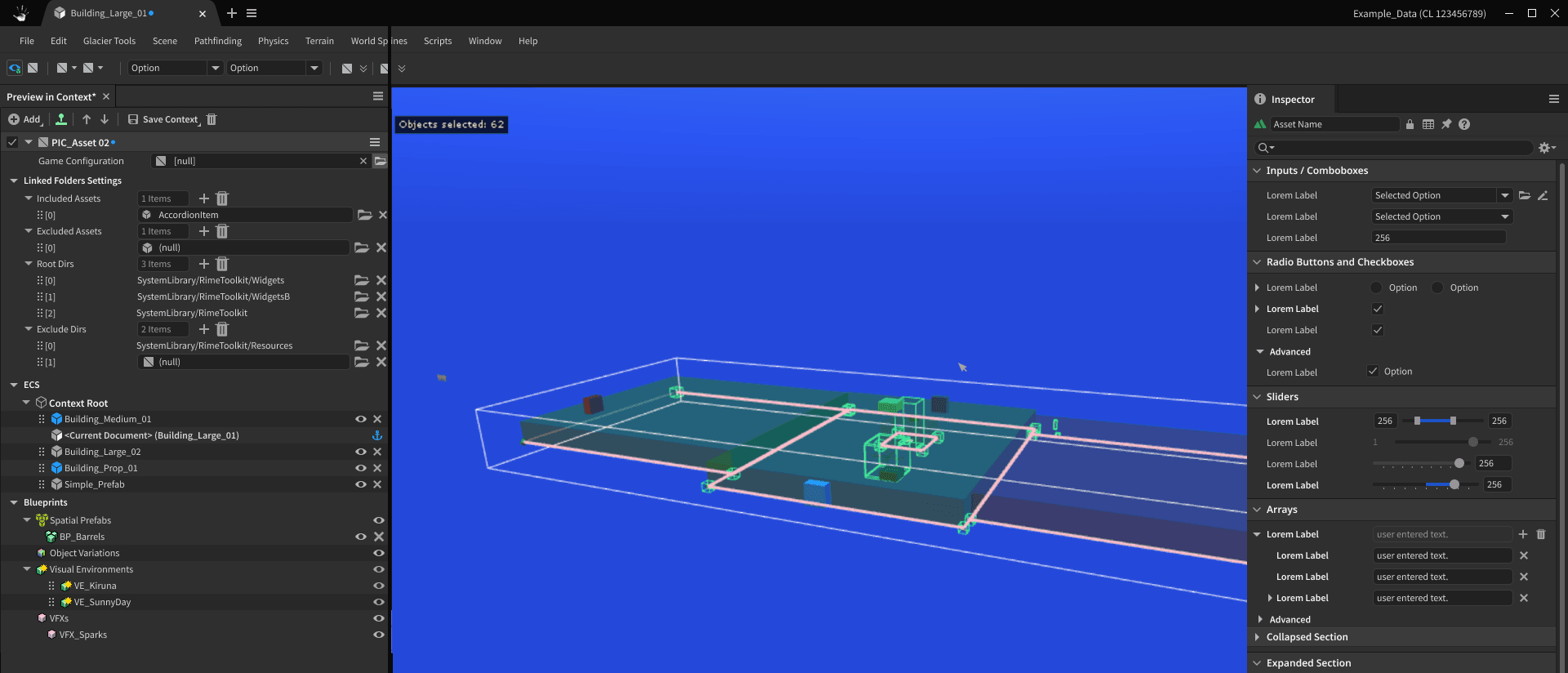
Early sketches exploring information hierarchy and workflow structure. I focused on isolating the preview controls from the main editing interface to reinforce the "safe sandbox" mental model.
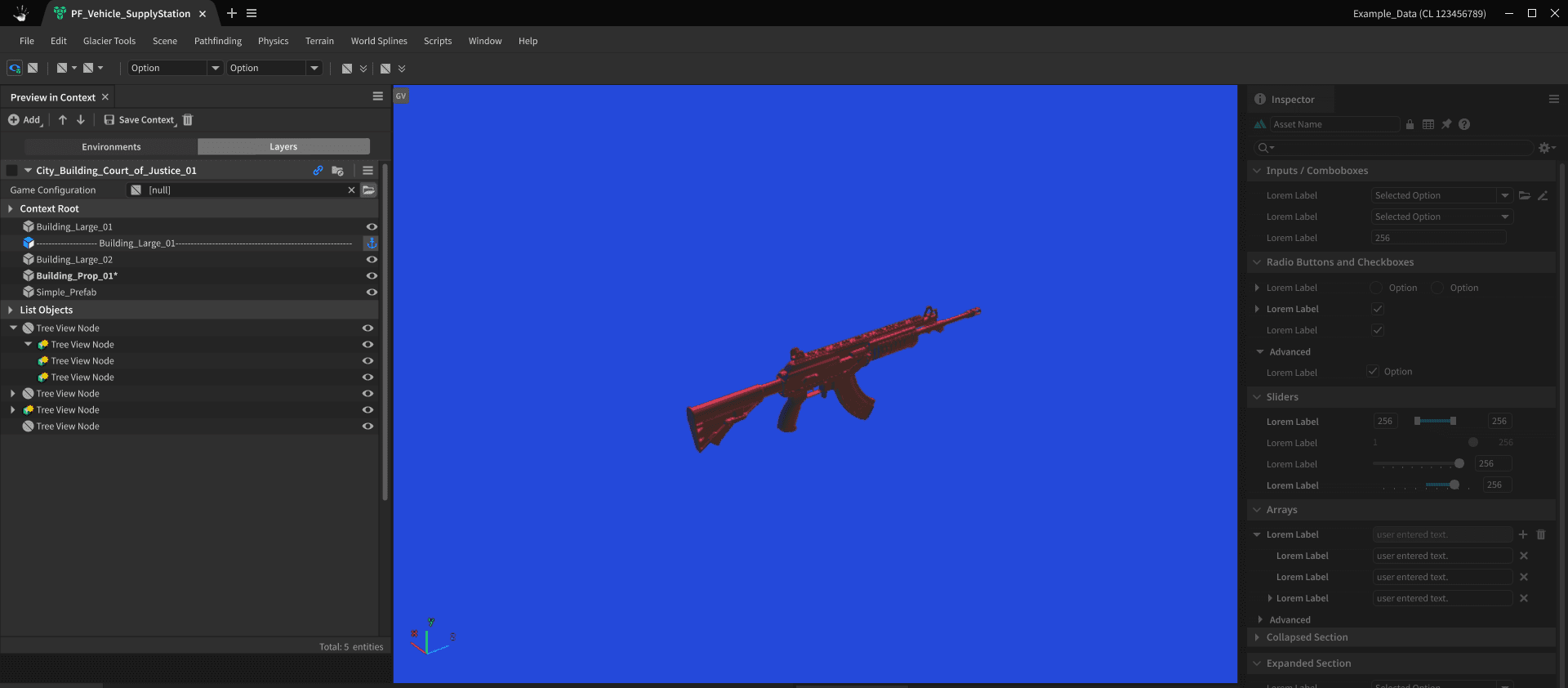
Left Panel / Prefab Focus
The left panel became the control center for selecting and
configuring prefabs for preview. This area needed to feel
familiar to existing Frostbite patterns while making the
isolation explicit.
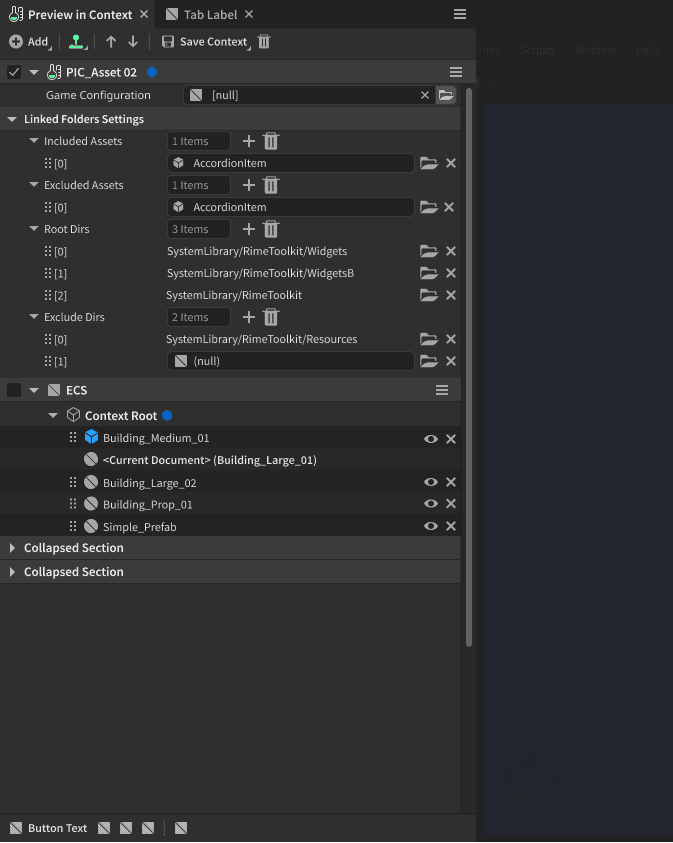
UI Detail Focus
Detailed view of the preview configuration interface.
I prioritized clarity over density—developers needed to
understand their test setup at a glance without digging
through nested menus.
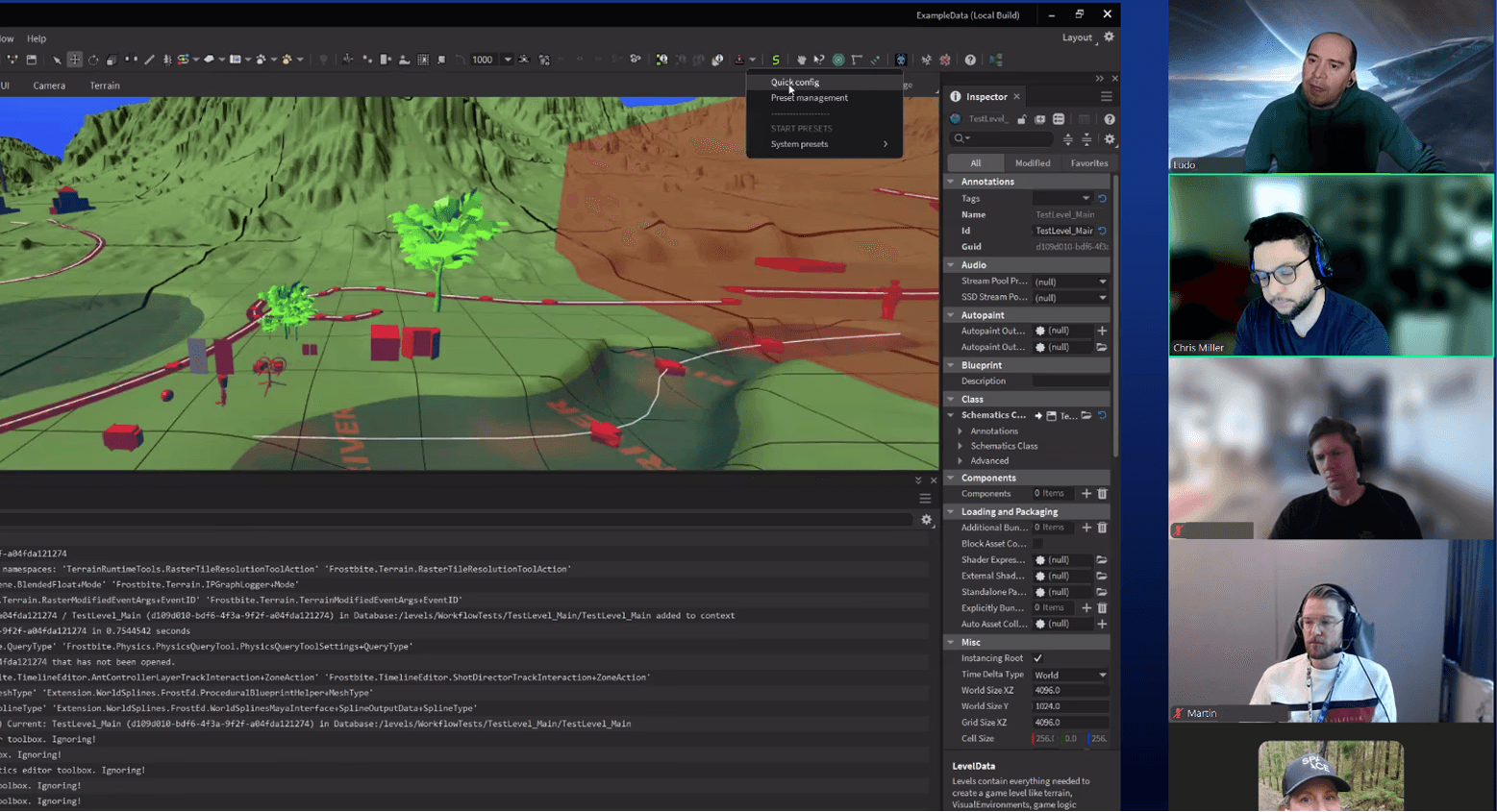
Remote Working Session
Remote working session with Martin (Product Manager) and engineering leads reviewing design iterations. These sync points were critical for alignment across the distributed team.
Challenges
Navigating Constraints:
Remote/distributed team (Toronto → Stockholm, Vancouver, US). Strong collaboration with engineering, but systemic constraints: limited visibility into implementation between weekly syncs, siloed org structure, user research quietly discouraged.
Three game teams had already built fragmented preview solutions. Load times were 15-20 min (sometimes over an hour), causing crashes that lost work. Developers spent time creating backups before every test—learned behavior from unstable tools.
Approach:
I co-designed Preview-in-Context with the Technical Director and team as the natural evolution of Preview Objects. The design had to absorb multiple existing solutions while positioning itself as the unified path forward.
Made previews non-editable by default—the design choice was psychological safety over flexibility. Maintained connection through 1-1s and Zoom/Slack with partner SWEs despite limited visibility into distributed implementation.
Key Decisions
"Chris's approach to problem-solving is both strategic and empathetic. He doesn't just design solutions; he understands the people and systems behind them."— Martin, Product Manager
1
Leverage Existing Patterns
Engineering proposed spreadsheet view. I pushed back: we already had Data Explorer. Don't fragment mental models.
Trade-off: Development convenience vs. pattern consistency
2
Non-Editable by Default
Made previews view-only. Developers forgot to make backups because they didn't need to. The design choice was psychological safety over flexibility.
Trade-off: Flexibility vs. psychological safety
3
Evolutionary Absorption Strategy
Three game teams had already built fragmented preview solutions. Co-designed Preview-in-Context as the natural evolution, positioning it to eventually become one unified solution.
Trade-off: Forced migration vs. evolutionary path
4
Ship to Meet Brief Timeline
Maintained connection through 1-1s and Zoom/Slack with partner SWEs, but organizational structure meant limited visibility. Shipped to meet brief timeline despite never getting user validation data.
Trade-off: Ideal research cycles vs. organizational reality
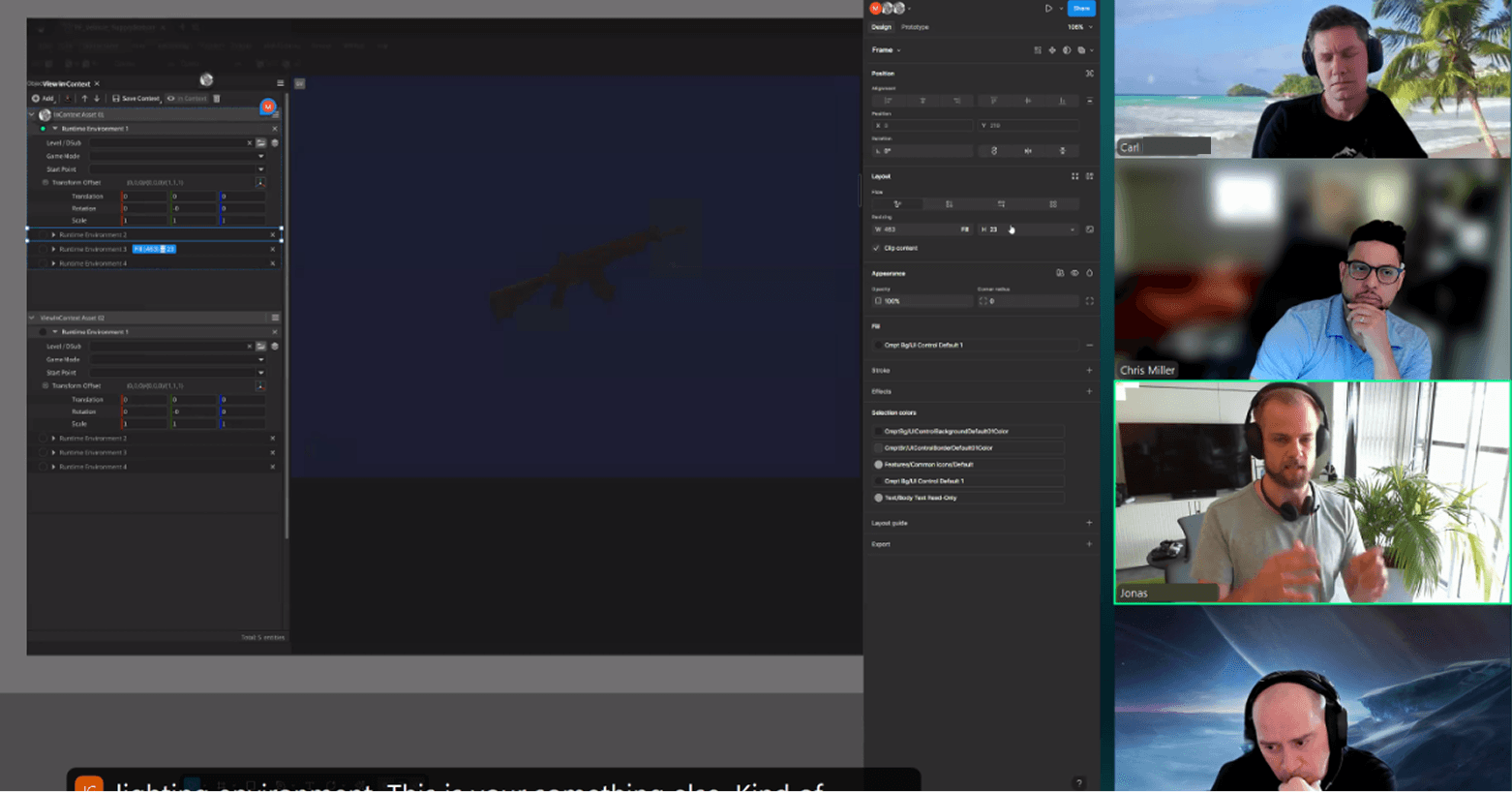
Remote working session with our stakeholder Jonas reviewing Preview-in-Context progress. We discussed the key design decisions below, weighing trade-offs and aligning on the path forward.
Where It's At Today
Preview-in-Context is in its final stages of implementation. I'm working closely with my lead engineers to ensure usability holds strong as we prepare to ship. My goal is to keep the team abreast of opportunities to test this as it gets into the hands of our end users—the Battlefield development teams—so we can measure impact in an ongoing, meaningful way. Jonas represented our stakeholder proxy well, but we'll need hard data: a mix of telemetry and qualitative feedback to validate what we've built.
This project was the first and biggest initiative for the SCENE engineering team and me as a representative of the Experience Design team in 2025. It was the perfect scenario for all of us to come together and establish our way of working—asking questions that are both curious and intentional, listening to the voice of the customer (the Battlefield game dev teams), and assessing existing precedent patterns. We leveraged the Frostbite Design System (which the UX team owns, and I serve as a touchpoint for) to build efficiently and maintain consistency across the engine.
I never felt like an outsider while working with the SCENE team. This is what dynamic cross-functional collaboration looks like: engineering and UX design moving in lockstep, building trust through retrospectives after every initiative, continuously improving our process. That's why it's as strong as it is today. I'm proud of this work, and even more proud of the partnership we built along the way.
Next up
Lets create
& collaborate together
2026 Rolled out with Autobot love, coffee and donuts from Toronto by Christopher Miller