420M Issues.
Zero
Adoption.
14,000 enterprise clients were avoiding OneTrust Issues Management entirely. With misclassified data, zero migration path, and real legal exposure at every audit, I was brought in to rebuild it from the ground up.
Solving a zero-adoption crisis — rebuilding the bridge between Risks, Controls and Incidents
As Principal UX Designer, I inherited a product that enterprise clients had abandoned in favour of JIRA and Excel. Issues Management was a technically capable system that had been built without UX involvement — and it showed.
I led end-to-end research, service blueprinting, and a 3-stage migration system design across 10 months — turning resistant clients into collaborators and leaving behind production-ready specifications for 14,000 organisations.
Product Manager — Content Designer — Engineering Lead — Controls and Risks Counterpart — Platform Principal Designer
An F1 racer with no engine — identifying the core failure
When I inherited this product, clients were avoiding it entirely. The system had near-zero adoption. Workday, John Deere, and Woolworths had found workarounds — JIRA and Excel. My mission: get this powerful platform onto the track.
Near-Zero Adoption
Clients were actively avoiding the product. Change management took too long. Major enterprise clients had built their own workarounds in JIRA and Excel.
420M Misclassified
35,000+ misclassified issues per client created real legal exposure. ISO audits, potential fines, and broken data integrity. The product was built with no UX support.
12 Verticals. Not Talking.
Issues was meant to connect to Assets, Vendors, Audits, Ethics, and Incidents — but the connections were half-formed and haphazard. No clear migration path existed for 420M records.
What the evidence said
The system wasn't failing by design — it was waiting for someone to see what it was trying to become. Three independent lines of evidence — from myself, my Staff UX Designer counterpart, and the Platform Principal — all pointed to the same structural truth.
The platform had always known what it needed to become. Every vertical gestured toward it — partial connections, half-built bridges, promising starts. None of them finished the story.
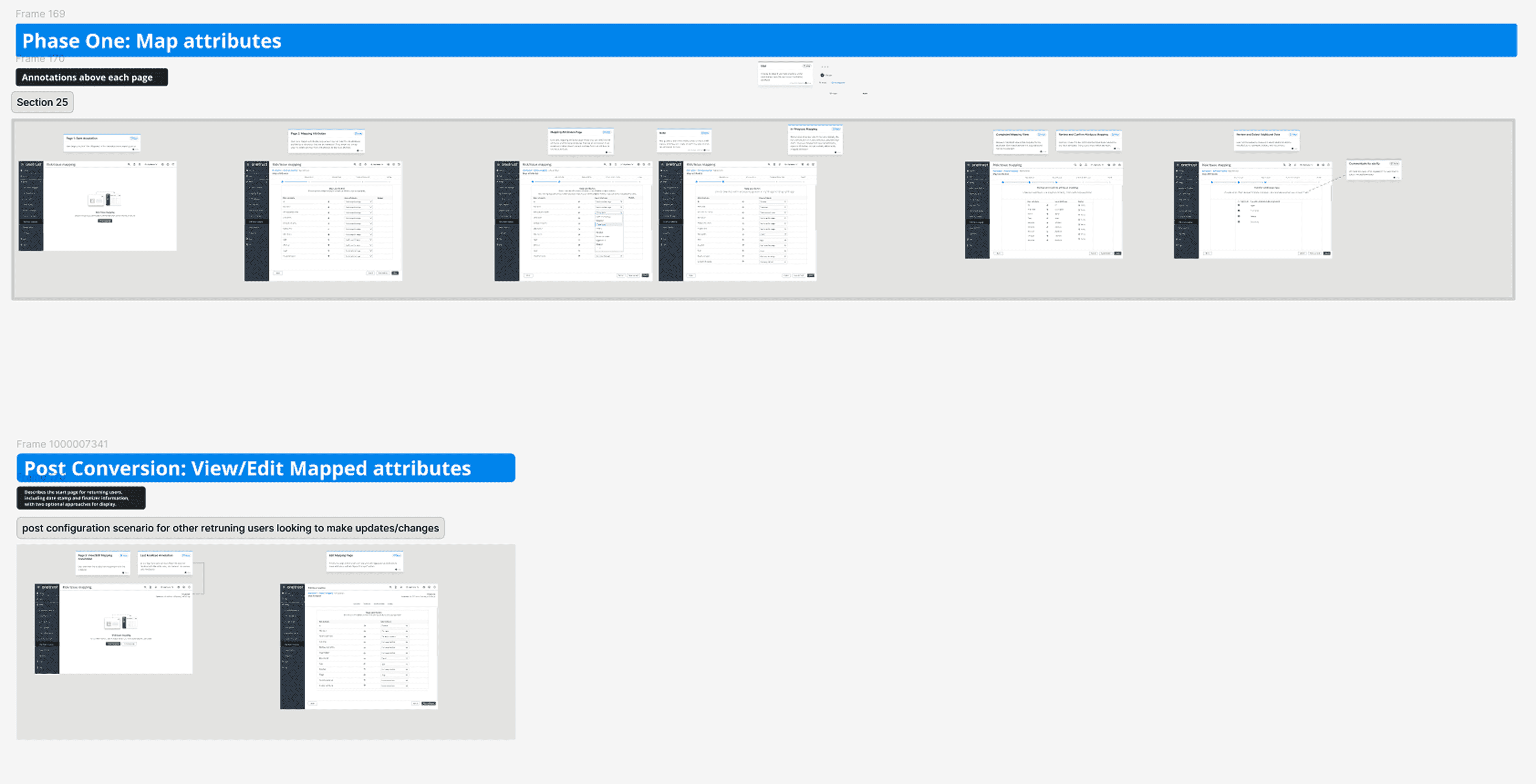
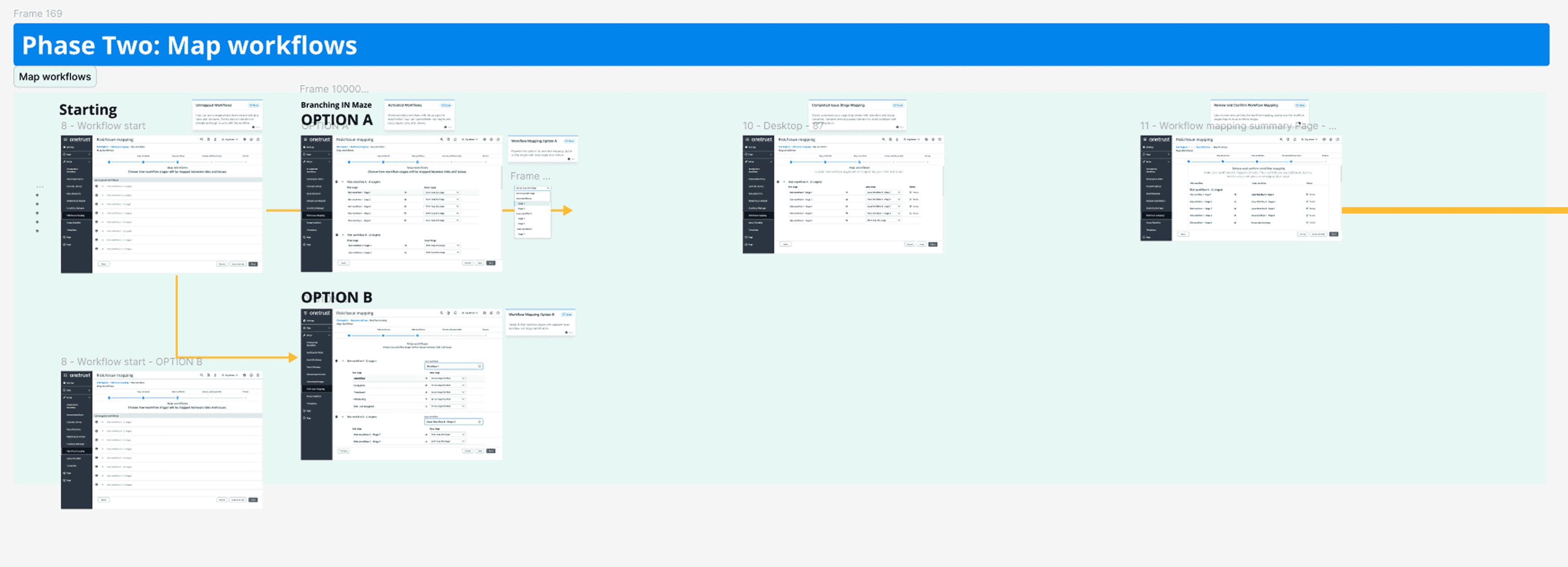
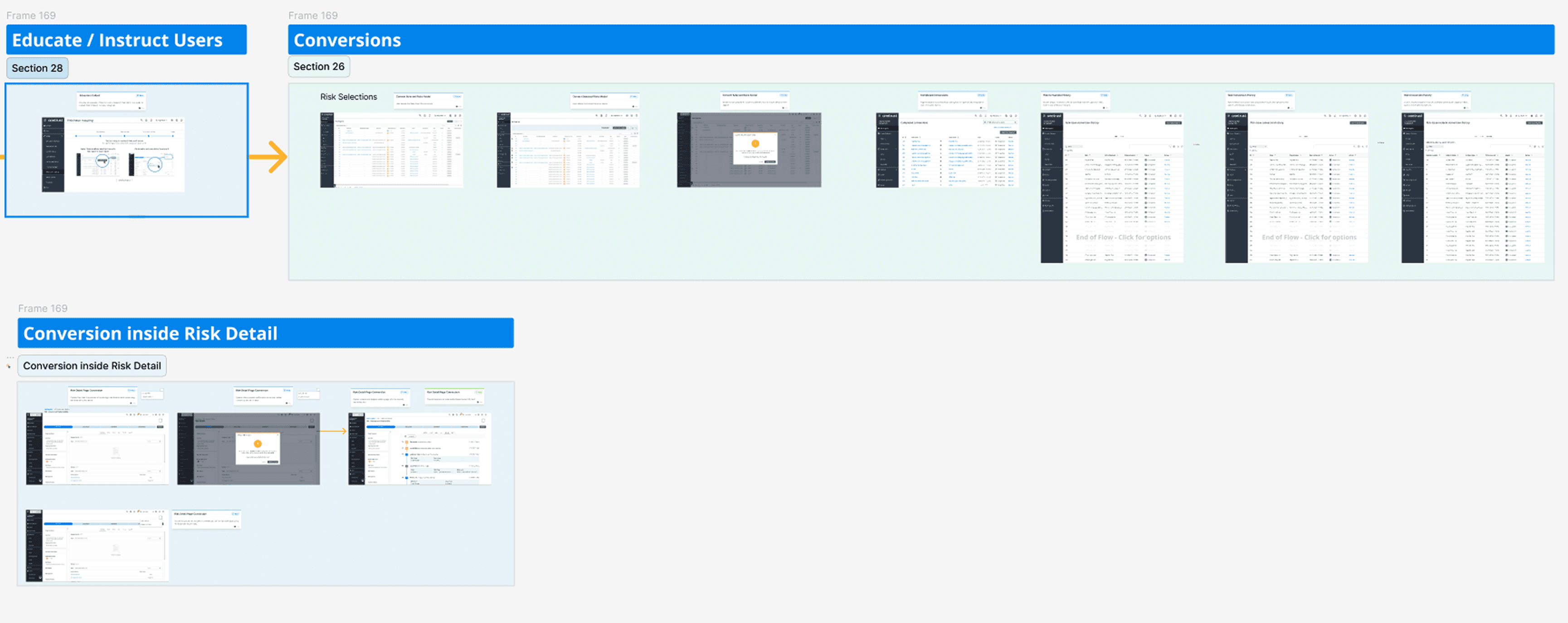
A 3-stage migration process — designed with the clients who'd given up
Map data fields from Risk to Issues, handle required vs. optional, flag conflicts before migration
Map workflow stages with parent-child relationships, accordion pattern for 10+ workflows, save/draft capability
Select risks to migrate, execute with full reversibility (recycling bin), no data duplication
Research conducted with 6 internal power users and 6 enterprise client validation sessions — Woolworths, Workday, and 4 others. The clients who had been actively avoiding the product became our most valuable collaborators.
Clients hadn't abandoned the platform because it failed them — they left because the cost of change management was too high. Their workarounds in JIRA and Excel weren't habits. They were protective measures against a system that had burned them before.
“The clients didn't just tell us what was broken; they helped us imagine what good truly looked like.”
“Change management takes too long — we're already using JIRA and Excel.”
The pivots that
defined the design
Three critical decisions that transformed a broken modal experience into a production-ready migration system built for enterprise scale.
“What if we have
100 workflows?”
Full-Page vs. Modal
Too much data for scrollable modals. Moved to dedicated full-page flows with a persistent stepper — giving users orientation and control throughout migration.
Save State / Draft Mode
Users pause mid-migration — any authorised user can pick up exactly where someone left off. Critical for enterprise teams with distributed workflows across time zones.
Accordion Compression
One client asked: what if we have 100 workflows? That question drove us from horizontal mapping to a vertical accordion pattern — scalable to any volume.
Delivered.
Documented.
Ready to build.
Ten months of research, blueprinting, cross-functional alignment, and iterative design — completed before transitioning to EA Frostbite. Everything represents work left in a state ready to build, not just ready to present.
I unified 4 designers across verticals under shared conventions, co-led client validation sessions, and ran a parallel Ethics SpeakUp investigation workspace concurrently with the main engagement.
Engineering implementation continued after my transition.
The work the research demanded
After the engagement ended, I returned to an unanswered gap on my own initiative. Clients hadn't left because the product failed them — they left because the cost of return felt too high.
I built two live, interactive prototypes to show them exactly what their data could look like inside the platform.
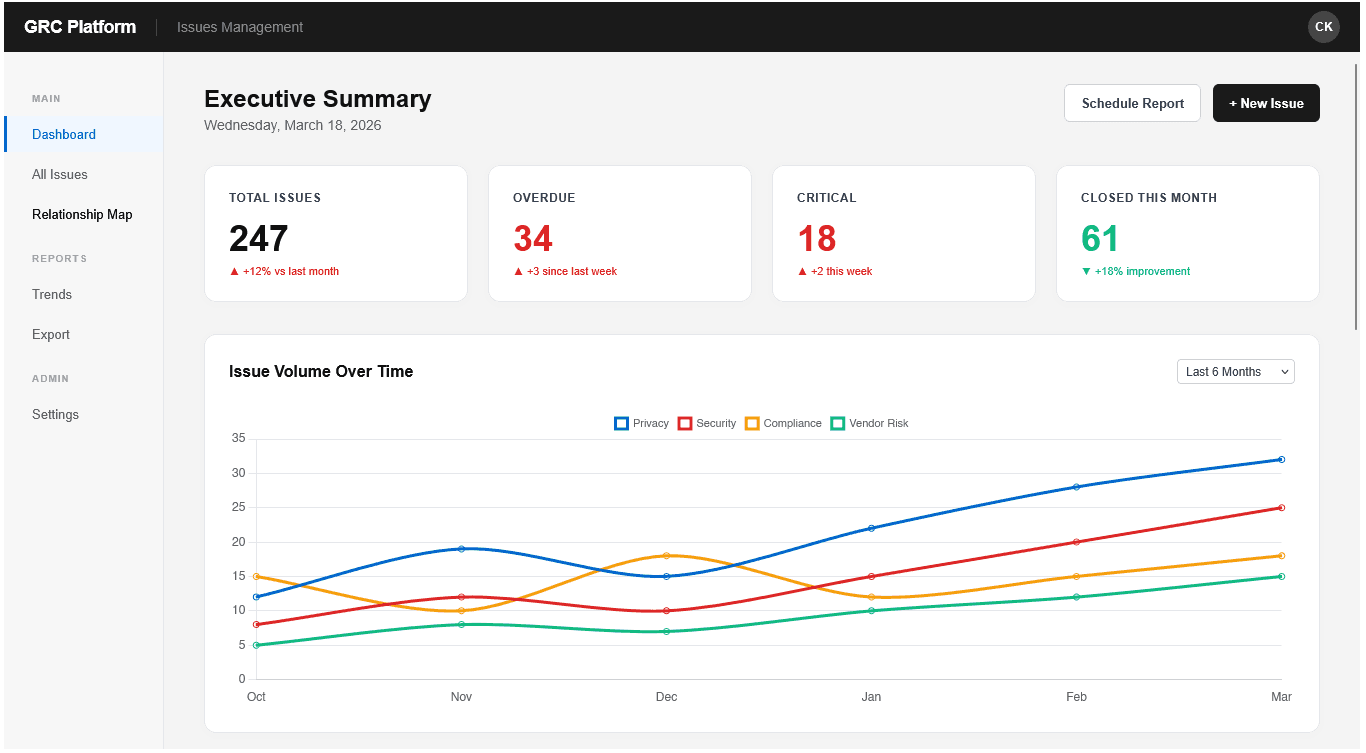
GRC Issues Management Dashboard
An executive summary dashboard that transforms raw compliance data into actionable intelligence. Built around a composite Senior Compliance Analyst persona facing an ISO audit with 180,000 potentially misclassified issues.
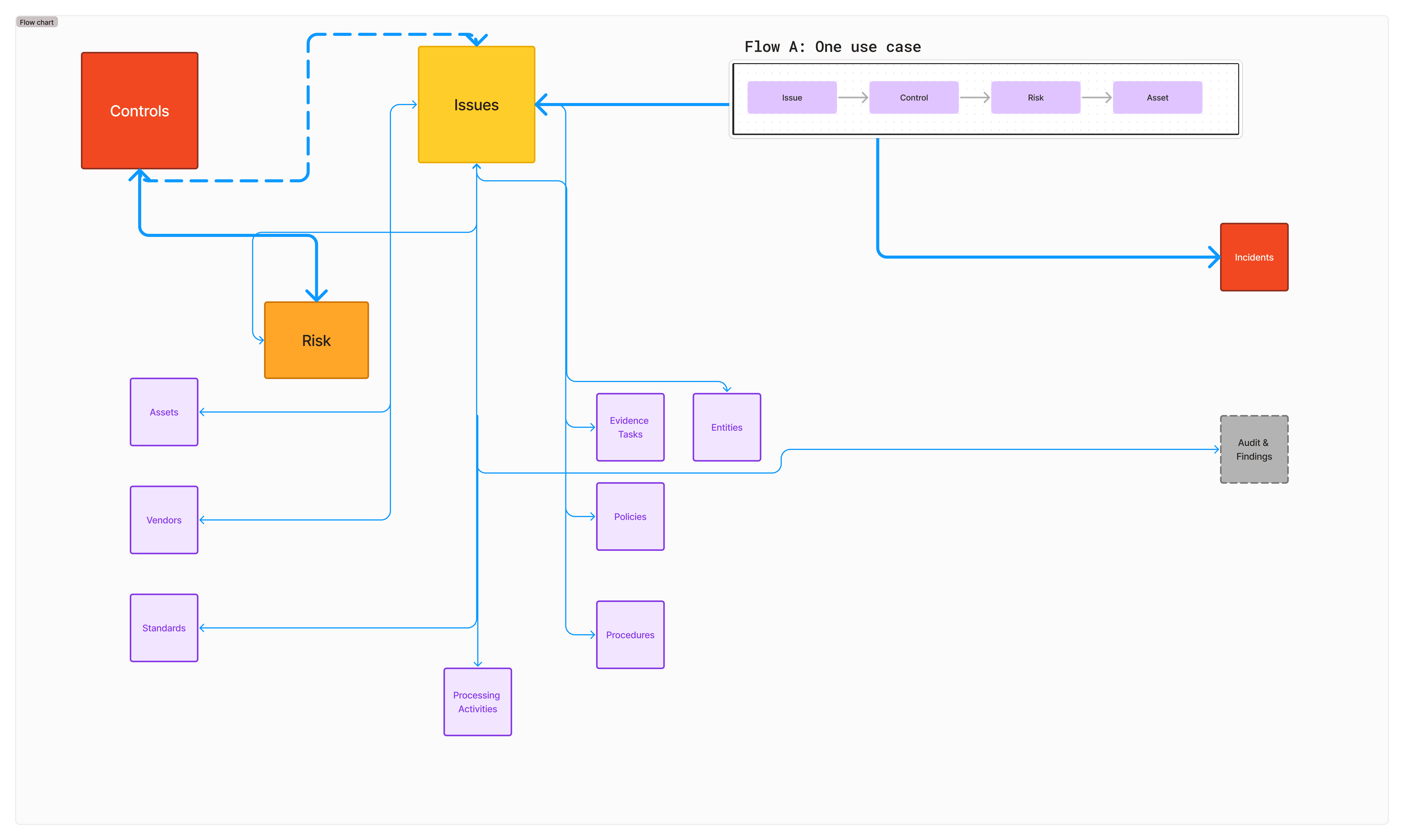
Relationship Map
A cross-entity network visualisation showing how Issues, Risks, Controls, and Vendors connect across a compliance ecosystem. Designed to surface the systemic consequences of a single unaddressed issue — and give compliance teams the spatial intelligence to act before an audit finds it first.
The Principle
Recognition before action.
Return, not restart.
Not as a pitch, but as proof.
Designing for the Long Game
When I joined OneTrust, Issues Management was a cautionary tale: a system shipped without a single UX designer or user researcher on the team. No one had mapped how compliance professionals actually think. The product launched, clients tried it, and quietly walked away. My role was created because of that absence — and I was brought in to hold both functions: principal-level designer and researcher, working to recover what should have been built in from the start.
I conducted six internal interviews with the Chief Trust Architect, GRC Analysts, and InfoSec Specialists, synthesized the findings, and identified the gap between the platform's internal expertise and the client reality it had never reached. I designed and led the service blueprint sessions with the internationally distributed engineering team — running them at 6AM my time for over a week because getting engineers in their optimal window mattered more than my schedule. The current-state diagrams, ecosystem maps, and cross-vertical alignment work were mine. They became the shared foundation the product team had never had.
When organizational layoffs removed my product manager mid-engagement — someone with six months of context I didn't have — I chose to carry the initiative forward. I kept experience design at the forefront and ensured the work held its footing through a period when it easily could have collapsed. That continuity was a decision I made and saw through.
The migration flow was one deliverable. But the research pointed further. I investigated how issues, risks, and controls needed to be visualized relationally — work that was out of scope, but necessary. That research directly informed two prototypes I built independently: a Relationship Map that surfaced connections between entities the platform had never made visible, and an Issues Management Dashboard that replaced a color-coded table with a genuine monitoring layer. Neither existed at OneTrust. I laid the groundwork and built both.
What this engagement confirmed is that isolated feature improvements rarely move adoption. What brings clients back is a platform that behaves coherently — where resolving an issue propagates meaningfully into risks, findings, and audits without requiring clients to manually close the loop. The real opportunity was always systemic.
I left behind something more valuable than shipped features: a validated approach, production-ready specifications, and a team aligned on solving the right problem. The prototypes I built after the handoff were my answer to the question the research wouldn't let me leave unanswered.
Designing Success
Take a look at how I collaborate with teams across diverse industries — bridging research, strategy, and craft to ship products that matter.